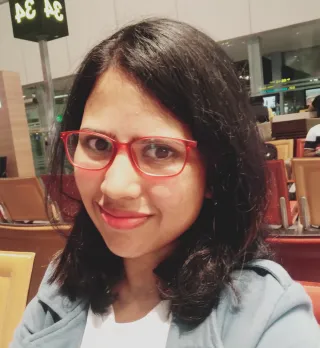
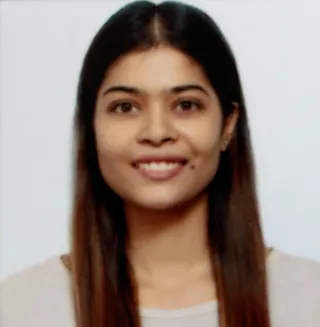
Dr. Soumya Podury

4 articles

Dr Soumya Podury completed her undergraduate training at Gandhi Medical College Hyderabad. She went on to train in ophthalmology at Sankara Nethralaya, Medical Research Foundation Chennai. She was awarded the Dr Alandur Meghanathan Selvaraj endowment award for Basic Sciences in Ophthalmology. She has cleared the International Council of Ophthalmology examinations (ICO) and holds the membership at the Royal College of Surgeons Edinburg (MRCS ed). Dr Soumya has keen interest in post graduate education and training and has presented scientific research at national and state level.

  1. Interesting Reads 2 Apr 2021 21 min read

    Musings from the Wise in the Covid Era

    We all are in the midst of an unprecedented global crisis due to the COVID-19 pandemic. This global pandemic has changed the ophthalmology practice pattern and there is an atmosphere of growing uncertainty among the ophthalmologists. We three spoke to some of the finest and sharpest minds in Indian ophthalmology and teachers of the teachers. Dr. Amod Gupta is a world-renowned ophthalmologist and teacher of teachers. Dr. Gupta retired from the Advanced Eye Centre, Postgraduate Institute of Medical Education and Research (PGIMER), Chandigarh. Dr. Amod Gupta has been a teacher and mentor to many for over four decades. Dr. Gullapalli Nageswara Rao founded the L V Prasad Eye institute in 1987. Dr. G N Rao has shaped many minds in his illustrious career in the field of ophthalmology. He has notable contributions to the advancement of ophthalmology in the nation. He currently holds the honorable position as the Chair of the Academia Ophthalmological Internationalis. Dr. Lingam Gopal is a pion
  2. Students Gallery 1 Apr 2021 6 min read

    LASERs in Ophthalmology: A Concise Guide for the Postgraduates

    LASER is an acronym for “light amplification by stimulated emission of radiation”. Invented more than 50 years ago, today lasers are synonymous with precision and sophistication. The first medical application of lasers was the use in retinal photocoagulation and that role has been ever-evolving. Today its application is evident in all subspecialties of ophthalmology as a diagnostic and therapeutic tool. Since medieval times, the damaging effects of strong light have been known to mankind. Socrates advocated avoiding direct viewing of the solar eclipse. The first documented use of light therapeutically was by Meyer- Schwickerath. He focused sunlight on the retinas of patients to treat melanomas. An undocumented early experiment with the aim of therapeutic photocoagulation was done by Moran- Salas in the 1940s. Meyer- Schwikerath highlighted that photic burns may be beneficial as a therapy. However, the major limitation of this was the requirement of enough sunlight to achieve the desire

  3. Students Gallery 1 Apr 2021 7 min read

    Practical Examination DNB Ophthalmology

    The following write-up contains some of the frequently asked topics during the DNB practical examinations. Do keep in mind that this is just a sample, the scope of Ophthalmology is vast and it’s the 3 years effort put in during the course of residency that makes you comfortable to face the examination. It is important to have a thorough knowledge of the frequently asked questions, rather than knowing rare, obscure facts. In the end, it’s all back to basics! Any examiner starts questioning with a basic level of questions that he deems are essential knowledge for the candidate to pass or be qualified as an ophthalmologist, once the candidate clears that level only then does the examiner pose level 2 or level 3, the relatively tough/ rare/ newer questions. This should make clear that in order to clear the examination, level 1 questions MUST and should be answered! And that is what the following literature will focus on mostly. Exam Pattern: Most centers usually have: 2 Anterior Segment ca

  4. Students Gallery 21 Oct 2020 2 min read

    Download Ophthalmology Fellowship Information Booklet

    Why this book? It was the question that prompted us to find answers in this form. Despite obtaining rigorous theoretical and practical lessons during post-graduation, most of today's Ophthalmologists are finding themselves in gridlock when confronted with actual clinical and surgical situations. In the present era doing fellowships has become of utmost importance because, in fellowships, they are hand-held further a while before letting on to the field. Fellowships help in shaping up the future, aid to have maximal clinical and surgical exposures. This special experience instills a strong foundation for a successful career to young doctors sailing on the learning curve. Like in all streams medicine, the availability of multiple options is making the web more complex. The key is to choose the right training program suiting best to one's interests, and dexterity has become precious. There is no centralized admission process and counseling. Many times residents conduct a fishing expeditio