

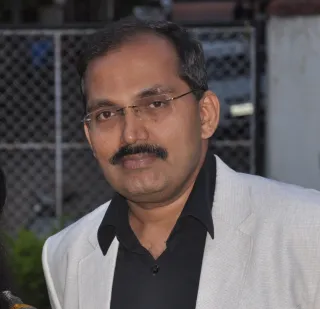
Dr. Sayali D Mahajan

Fellow, Pediatric Ophthalmology, M.M. Joshi Eye Institute, Hubli

2 articles

Dr. Sayali D Mahajan finished her MBBS from Rajiv Gandhi medical College, Kalwa, Thane and completed her DNB ophthalmology (2016-2019) from Aravind Eye Hospital, Pondicherry. Currently she is pursuing Pediatric Ophthalmology fellowship from M.M. Joshi Eye Institute, Hubli

  1. Articles 1 Apr 2021 7 min read

    Refraction Simplified for the Post Graduates

    The optics of the eye normally creates a clear image by refracting rays of light to focus on the retina. Imperfections in this optical system create aberrations and thus blurred images. The goal is to analyze them and devise a means to eliminate them. Lower order aberrations are primarily refractive errors when parallel rays of light after refracting, do not focus on the retina with accommodation at rest. 1. Retinoscopy It is the objective method of detecting refractive errors by a method of neutralization. Point focus formed at a far point of the eye according to its refractive status. For e.g. In a patient with 1 dioptre of myopia, the far point is at 1 meter. For easy mathematical calculations, 1metre is used for retinoscopy. But practically, 66cm is preferred as it is easier to perform retinoscopy at an arm’s length (which is 66cm). The two principal meridia are recognized and power is determined by neutralization. Usually the two meridia are 90 degrees and 180 deg. In cases of obl

  2. Articles 1 Apr 2021 9 min read

    Ten Commandments in Squint Workup for Postgraduates

    Squint is the Ocular Imbalance in which visual axes of both eyes do not meet at the point of regard. It can be regarded as a form of One Eye Blindness since both eyes are not seeing simultaneously, with a squinting eye being suppressed. Hence strabismus must be treated with due care. Squint evaluation can be simplified by the following checklist. Every squint patient must undergo this checklist of 10 commandments so as to plan management. 1. Determine whether True squint or a Pseudosquint The architecture of face and orbit may give the impression of a person having an apparent deviation. Careful inspection of lids, adnexa, position of globes will reveal no actual squinting of eyes. Two important parameters to rule out Pseudosquint Hirschberg reflex will always be centered No redressal movement on cover test Epicanthus and broad nasal bridge - extra fold of skin on the medial canthus gives the appearance of esotropia. On pinching the nasal bridge, the squint will disappear. Facial asymm