

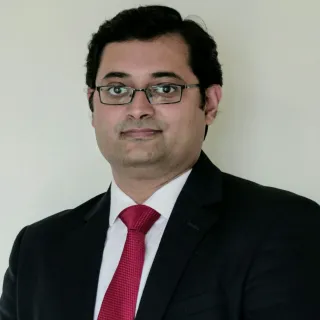
Dr. Sabyasachi Sengupta

Director of Senguptas Research Academy

3 articles

Dr Sabyasachi Sengupta DO, DNB is currently pursuing a fellowship in surgical vitreoretinal disorders at Sankara Nethralaya, Chennai, India. He completed his Diploma in Ophthalmology from JIPMER, Pondicherry and Diplomate in National Board from Aravind Eye hospital, Pondicherry. He was awarded the Mc Cartney prize from the royal college of Ophthalmologist’s in London for securing the highest marks in section of Ocular Pathology in FRCOphth Part I exam held in January 2010 and had the distinction of being the first ever non British national to receive this award. He won the G. Venkataswamy gold medal in DNB, Ophthalmology for the exam held in December 2009. He also won the national quiz at the All India Ophthalmology conference in January 2009. He was awarded the Swarnalatha Punshi award for the best research fellow at Sankara Nethralaya for the year 2010 – 2011. He has published more than 30 articles in peer reviewed journals and has presented more than 13 papers and posters so far in national and international conferences. He is a regular reviewer for many journals including Archives of Ophthalmology, Ophthalmic surgery, Lasers and Imaging and Indian Journal of Ophthalmology. He has featured in American Cataract and Refractive Surgery Podcast (#229) discussing Toxic Anterior Segment Syndrome released on the official website of the ASCRS in December 2011. He is a life member of the All India Ophthalmology society, Tamil Nadu ophthalmic society and Pondicherry Ophthalmic Association. His current research interests include pathology of retinoblastoma, Endophthalmitis, Diabetic retinopathy and polypoidal choroidal vasculopathy. His open attitude towards sharing his insights on preparations for DNB examination in India clearly exemplifies spirit and core values of mutual help and collective intelligence.

  1. Blog 3 May 2020 5 min read

    Tips to prepare for the DNB, Ophthalmology Examination

    eOphtha: Congrats Sabyasachi!! What is the secret of your success? Sabyasachi: Thank you very much for those kind words. I am humbled. There is no magic formula for success but a combination of hard work, perseverance and a little bit of luck does the trick. eOphtha: How should one proceed to prepare for the DNB, Ophthalmology exam? Sabyasachi: The approach to preparing for any examination must be simplistic i.e. what to read and where to read it from and finally How to read everything in a short time. These are the 3 core ingredients that, if planned and executed well, can bring success. eOphtha: Can you give us a brief idea into these ingredients? Sabyasachi: The most important consideration is where to read topics. I will give a brief outline of this. It will help students to use these resources and not only expand their knowledge base but also help them apply this to clinical scenarios and thereby improve patient care. There are basically 3 sources of reading: Conventional text Boo
  2. Blog 21 Feb 2020 4 min read

    Five Tips for the Postgraduate to Start Publishing

    Post graduation can be a daunting task with a lot to imbibe in very little time. In ophthalmology, the science is changing ever so rapidly that a three-year residency period is almost too little to grasp the nuances of the subject. In addition to learning examination skills, you have to learn surgical skills and read literature to keep yourselves updated. Amongst all this, how do you find time to publish papers during residency? Does it really matter whether you publish any papers during this time? Are there any advantages you score over your peers if you manage to publish a few papers? I certainly have experienced the riches of publishing some meaningful papers during my residency. How I managed to do it can be read here (Click here to read the article). In this write up, I will share with you some tips on how you can start publishing during residency itself : Tip 1: Be in touch with the evolving literature Subscribe to E-Table of contents of all the major ophthalmic journals and read

  3. Blog 13 Feb 2020 5 min read

    How l published 35 papers in the best Ophthalmology journals during Residency

    Publishing papers in scientific journals is the biggest boost you can get. It is an adrenaline rush that is understood only when experienced. Even after having achieved a few recognitions and awards, including the DNB gold medal, I still find it exhilarating to work on papers and get tremendous joy when a paper is accepted in a journal. Publishing is a great habit to develop early in your career and once you have a few papers under your belt, the habit literally turns into an addiction and you keep striving to publish more. There are many successful surgeons when you look around, but there are only a few researchers who have made it big in India. As a resident, there is plenty of scope to publish papers (especially from India) and make your mark. I also feel that getting peer recognition is much faster when you publish meaningful studies that influence practice patterns rather than by doing good surgery alone. This will eventually translate into more patients seeking your services and