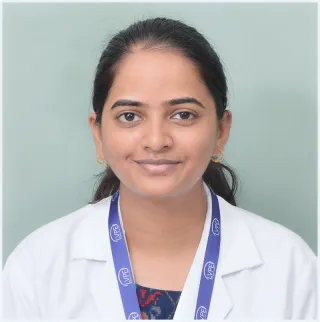
Dr. Ramesh Kekunnaya

Head of Pediatric Ophthalmology, Adult Strabismus and Neuro-ophthalmology Child Sight Institute, Jasti V Ramanamma Childrens Eye Care Center L V Prasad Eye Institute,Hyderabad, India

2 articles

Ramesh Kekunnaya, MD, FRCS(Ophthal) received his basic medical training from Karnatak Medical College, Hubli and specialized in ophthalmology from Government Medical College, Mysore, India in 1999. He completed a comprehensive ophthalmology fellowship (with special focus on Strabismus and Neuro-ophthalmology) at L V Prasad Eye Institute, Hyderabad followed by a Pediatric Ophthalmology & Strabismus Fellowship (AAPOS accredited) at Jules Stein Eye Institute, University of California, Los Angeles, USA. Dr Kekunnaya is currently, the Head of Pediatric Ophthalmology, Strabismus and Neuro ophthalmology at Child Sight Institute and Jasti V Ramanamma Childrens eye care centre, LVPEI, Hyderabad and Clinical Assistant Professor Case Western Reserve University Cleveland, Ohio. He is in charge of the Pediatric Ophthalmology and strabismus fellowship program. He is a member of the American Academy of Pediatric Ophthalmology and Strabismus (AAPOS), World Society for Pediatric Ophthalmology & Strabismus (WSPOS) and AAO. He is an executive bureau member of WSPOS and administrative council member of ISA (International Strabismological Association) member Low Vision Committee of AAPOS. He has presented at various international and national meetings including named Keynote lectures. He received Achievement award from AAO in 2012 and APAO in 2016, International scholar Award from AAO in 2014 and HONOR AWARD from AAPOS in 2016. He was a William Giles lecturer at ANZSS, RANZCO, Sydney Australia and invited speaker at prestigious Cambridge Symposium in UK. He has authored more than 100 publications in various peer-reviewed journals and is a reviewer for Ophthalmology, British Journal of Ophthalmology, AJO, Eye, IJO, EJO, Strabismus, Plos One, Nature scientific reports, Lancet and JAAPOS. He is a section editor - Pediatric Ophthalmology & Strabismus for BJO, BMJ Open Ophthalmology, IJO and Current Eye Research. He is actively involved in teaching and research activities in the pediatric ophthalmology services. His clinical interests include complex strabismus, pediatric cataract, vision development, lazy eye and neuro-ophthalmological disorders

  1. Articles 28 Sep 2021 4 min read

    Top-Ten-Must-Not-Forget-In-Strabismus-Evaluation

    1. External face features affecting the eye position Facial asymmetry and palpebral fissure shape changes alter the ocular position, possibly due to extra-ocular muscle heterotopy The common extra-ocular features affecting ocular position are craniosynostosis, hydrocephalus, facial fracture, mongoloid and anti-mongoloid slant, telecanthus, congenital superior oblique palsy (face fuller on the affected side), facial nerve palsy. 2. Head posture Head does what eye cannot do Look for abnormal head posture when a patient is reading best-corrected visual acuity with proper refractive correction. The target should preferably be at the eye level of the patient in order to avoid a false chin-up position Head tilt, turn, chin-up/down Head turn is the opposite side of the ear seen Measure with a goniometer Look for incomitant strabismus and nystagmus Keep patient’s head straight throughout the examination – eg. In patients with Duane syndrome, small change in head posture can cause large ocular
  2. Articles 1 Apr 2021 9 min read

    Ten Tips for Management of Nystagmus

    Nystagmus is defined as an involuntary rhythmic oscillation of one or both the eyes. Clinical assessment and eye movement recordings are important to diagnose and classify nystagmus. It is essential to have patience while examining a child, as anxiety often increases nystagmus. 1.Classification Physiological eye movements have to be differentiated from pathological eye movements. The older etiology-based classification of nystagmus is redesigned into characteristics-based new classification by CEMAS (Classification of Eye Movement and Strabismus). Infantile nystagmus syndrome (INS) is characterized by horizontal conjugate nystagmus, infantile-onset, accelerating slow phase, increase with fixation attempt, convergence dampening, and presence of null zone with decreased amplitude. Fusion maldevelopment nystagmus syndrome (FMNS) is characterized by decelerating slow phase, associated strabismus, a latent component with fast phase towards fixing eye and decrease in intensity with adduction