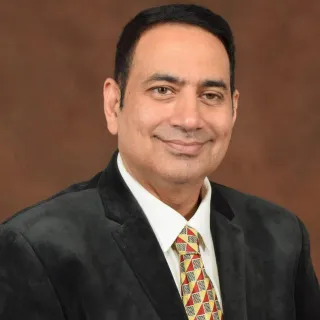

Dr. Rajiv Raman

Senior Consultant , Department of Vitreoretinal services,Sankara Nethralaya, Chennai, India

1 article

Dr Rajiv Raman is a Senior Consultant at Department of Vitreoretinal services,Sankara Nethralaya, Chennai, India. He is also a Visiting Professor at Vision and Eye Research Unit, Anglia Ruskin University, Cambridge, UK. He is a Section Editor in Nature Journal Eye, and reviewer of 32 international peer-reviewed journals. He is a member of National task force on Diabetic Retinopathy, Govt of India, National Board of examination, Ophthalmology (DNB), National expert: Certificate Course in Evidence Based, Management of Diabetic Retinopathy (CCDR) by Public health foundation of India, Member of National Task force on diabetic retinopathy, All India Ophthalmology society and a Member of FDAs Network of Digital Health Experts (NoDEx). He had received the Asia ARVO Young investigator award, Singapore, Ruby Banik Memorial award for best researcher at Sankara Nethralaya, Chennai, Dr. TLK Row Memorial Endowment award, Finalist in BMJ Award, South Asia, Late Dr. B.N.Shrivastava & late (Mrs.) Sarandulari Shrivastava Award of Research Society for the Study of Diabetes In India(RSSDI) for the year 2016 in recognition of research contribution to the field of Diabetes complications, CN Shroff award from All India Ophthalmology society, P. Siva Reddy International Award from from All India Ophthalmology society. He has 348 peer reviewed articlesin national & International journals, 8210 citations, h index: 38. He has contributed 18 chapters including Chapter on Telescreening for Diabetic Retinopathy in Ryans RETINA, 5th edition and 6th edition. Dr Raman did his MBBS from MGM Medical College, Indore. MS from Government Medical College, Surat, Gujarat and fellowships in Vitreoretinal diseases at the Sankara Nethralaya, Chennai. He was awarded FRCSEd from the Royal College of Surgeons, Edinburg. He was also awarded DSc, Health Sciences from Anglia Ruskin University, Cambridge. He has more than a decade experience in performing vitreoretinal procedures for retinal diseases. He initiated one of the first comprehensive programme for screening for Diabetic Retinopathy in India and is a pioneer in Teleophthalmology in India. Along with team from Google, he developed and validated automated retinopathy detection algorithm, which was published in JAMA. His published contributions have been many covering several different aspects of retinal diseases but concentrating on various aspects of diabetic eye disease. He is prime mover and clinical coordinator in several clinical studies including population-based study SN DREAMS in India. He is frequently invited to national an international meetings as his lecturing skills are exemplary. He is also a supervisor for postgraduate ophthalmologists and optometrists. His model of DR screening has been adopted by several institutes globally.

  1. Articles 17 Aug 2021 5 min read

    Ten Mistakes to Avoid while Treating a Case of Diabetic Retinopathy

    Diabetic Retinopathy is a common retinal disorder that is seen, managed, and followed up by not only a retina specialist but all ophthalmologists. It is a disease that is easy to diagnose, but often difficult to manage in a long run. For achieving optimal results besides the role of an ophthalmologist, one needs to have the involvement of a physician. The single most important factor for achieving a good outcome is patient compliance, as the disease, diabetes needs lifelong care. Here are few mistakes we need to avoid while managing a case of DR. 1. I can detect DME clinically, I don’t need OCT OCT is not mandatory if there are no signs of DR, or in very mild retinopathy (1 D, Amblyopia, Unilateral elevated intraocular pressure, Complete posterior vitreous detachment, Unilateral carotid artery stenosis, and Chorioretinal scarring 5. Ignoring a rapid progression of milder NPDR to PDR A rapidly progressive NPDR to proliferative retinopathy in a span of a few months (4-6 months) is rare a