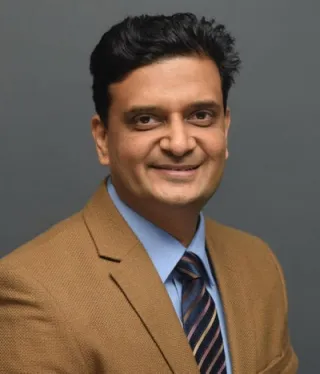

Dr. Milind N Naik

Consultant, Ophthalmic Plastic Surgery Service, LV Prasad Eye Institute, Hyderabad, India, Email: milind@drmilindnaik.com

1 article

Dr Milind Naik acquired his post-graduate training in Ophthalmology at the Christian Medical College, Vellore, India, He further completed his Ophthalmic and Facial plastic surgery fellowship at the prestigious University of California, Los Angeles in the year 2006-07. His areas of interest include Aesthetic and Facial Plastic Surgery, Thyroid Eye Disease, and Minimally Invasive Ophthalmic Plastic Surgery. He is the recipient of Senior Achievement Award by the American Academy of Ophthalmology in the year 2015, and is a member of the American Society of Ophthalmic Plastic & Reconstructive Surgery (ASOPRS). He served as the Vice President of the Asia Pacific Society of Ophthalmic Plastic & Reconstructive Surgery (APSOPRS) in the year 2010-12. Dr Naik has over 250 peer-reviewed publications in International journals, and lectures extensively across the globe in the field of ophthalmic plastic surgery, and facial aesthetics. Dr Naik currently is a Senior Ophthalmic Plastic Surgeon at LV Prasad Eye Institute, Hyderabad, India. He also serves as Associate Professor, Department of Ophthalmology and Visual Sciences, University of Rochester, New York, USA. He is on the Editorial Board of the Journal of Cranio Maxillofacial Trauma and Reconstruction (CMTR), Korean Journal of Ophthalmology (KJO), and Journal of Cutaneous and Aesthetic Surgery (JACS). His extra-curricular interests include painting, 3D videography, and paperfolding. His better half, Vibhavari Naik is an Anaesthesiologist, and they have a 20 year old daughter Jaee, who is currently pursuing her Medicine at St Johns medical college, Bangalore, India.

  1. Articles 21 Apr 2021 16 min read

    Facial Spasms: Diagnosis and Management

    Introduction Dystonia is defined as a movement disorder characterized by sustained or intermittent muscle contractions causing abnormal, often repetitive, movements, postures, or both [1]. They may be isolated or combined with other neurological symptoms or movement disorders [1]. Dystonia is classified based on the age of onset, etiology, clinical features, and body distribution. The body distribution may be either focal, segmental, multifocal, generalized, or hemi-dystonia. Only one region of the body is affected by focal dystonia. It emerges in late adulthood [1]. Patients with movement disorders isolated to the facial region often visit an Ophthalmologist. A brief knowledge about the identification and differentiation of the various facial movement disorders is essential. The disorder can be functionally or socially distressing to the patients. The facial movement disorders include orbicularis myokymia, Benign Essential Blepharospasm (BEB), Apraxia of Lid Opening (ALO), Hemifacial