

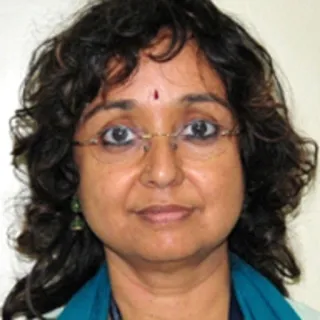
Dr. Meenakshi Swaminathan

Director, Academics ; Senior Ophthalmologist, Department of Paediatric Ophthalmolog, Sankara Nethralaya

4 articles

Dr. Meenakshi Swaminathan is one of the finest academicians and pediatric ophthalmologists par excellence. She did her residency from the PGIMER, Chandigarh and the University of Louisville, Kentucky. She did her fellowship in Pediatric Ophthalmology at the University of Iowa. She works at Sankara Nethralaya, Chennai, India, which is a tertiary care teaching hospital that trains residents and fellows. She served as Director of Academics, Sankara nethralaya, for over a decade. She has been working with the ICO in conducting several Teachers in Ophthalmology programs both in India and other countries.

  1. Students Gallery 5 Aug 2021 2 min read

    Ten Tips for OSCE

    Objective structured clinical exam (OSCE) has regained popularity as a significant part of practical examinations in recent times. This is in part due to the pandemic making it difficult to hold exams with actual patients. It also removes subjective bias and is considered a fair way to examine candidates. There are certain strategies that enable the student taking an OSCE based exam to do well and score maximum points. Here are some tips Preparation stage 1. Go through images in an atlas. Most OSCEs are image-based. So pay attention to clinical features by going through as many online free atlases that are available on the internet. Practice describing findings to your study partner. 2. Go through surgical videos. Videos of surgery may be shown as part of OSCEs with a review of steps and complications may be asked as an OSCE. 3. Revise the clinical trials and the acronyms. These are often asked as well. Many websites and textbooks have comprehensive tables that make revising trials eas
  2. Interesting Reads 2 Apr 2021 4 min read

    Ten Tips and Tricks to Examine a child in Your Practice

    1. Choosing the best time: Train your clinic receptionist to ask the parents when the child is likely to be cooperative and/or awake. It is not uncommon for infants to sleep a lot during the day. It is also not uncommon for children on anti-seizure medication to be sleepy, thereby making examination difficult. 2. Child-friendly atmosphere: Train your staff to speak to the child and address the child by name and smile and make the family feel welcome. The décor in the waiting area and in the examination room should be colorful with pictures and cut outs appropriate for a child. Furniture chosen should be non-impact and the flooring safe for children, if they fall. It should also be easy to maintain by wiping down frequently to prevent spread of infection. Using many colorful toys during examination takes away the fear of the experience to some extent for the child. 3.White coats: A child often associates white coats with doctors and hospitals. Hence it is best to avoid wearing one. If c

  3. Students Gallery 1 Apr 2021 3 min read

    Ten Tips for Postgraduates Preparing for Exams

    Everyone is going to tell you that you have to study from Day 1 of your course and you have to be systematic. Most of you, however, will end up postponing studying for exams till the very end. So here are some tips to help ease the tension and anxiety associated with exam preparation. Question bank: Familiarize yourself with the question bank for your course, especially for the last 5 years. Questions may be repeated, with the words changed. Get to know how the marking is done for various components of the question. For example, the clinical presentation may be allotted 4 marks and management 6 marks in a question. It is important to write in greater detail for the management part. Diagrams: There is no point in looking at diagrams. It will be impossible to recall the finer details if you are not intimately familiar with the diagram. Practice drawing with the correct color codes in a separate notebook which you can revise before the theory paper. Friends in need: It is not uncommon for

  4. Blog 1 Jul 2020 12 min read

    Meeting and Teaching in the VIrtual space: Dawn of a new era in Ophthalmic education

    The whole world is passing through an unprecedented crisis due to CoVid19. During such difficult times, education and academics have also suffered and undergone tremendous changes worldwide. Innovations and adapting to newer technology has been the key to keeping continuous teaching and learning. Here we have a look at a conversation involving two academicians and global teachers discussing how to overcome the issues at hand during these difficult times. On our request, Meenakshi Swaminathan spoke to Karl Golnik, MD, MEd, Chair, Education Coordinating Committee, International Council of Ophthalmology. Karl Golnik, MD, MEd is a neuro-ophthalmologist at the University of Cincinnati Gardner Neuroscience Institute; a professor of ophthalmology, neurology and neurosurgery at the Cincinnati Eye Institute and the University of Cincinnati; and professor of Ophthalmology at the University of Louisville. He is also Chairman of the department of ophthalmology at the University of Cincinnati. Curr