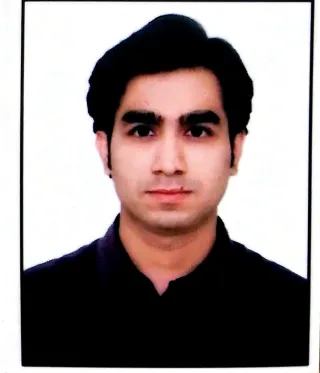

Dr. Kumar Saurabh

Senior Consultant , Retina Services,Sankara Nethralaya Kolkata

2 articles

Dr. Kumar Saurabh graduated from Burdwan Medical College and completed his ophthalmology residency from Regional Institute of Ophthalmology, Medical College Kolkata, India in 2009. After his masters he did a long term clinical vitreoretina fellowship from Sri Bhagwan Mahavir Vitreoretina Services at Sankara Nethralaya Chennai where he was awarded as the best outgoing clinical vitreoretina fellow. After completion of fellowship he continued to work as Consultant in the same department. Currently he works as a Senior Consultant in Retina Services at Sankara Nethralaya Kolkata. Dr. Saurabh has published over 90 articles in various national and international peer reviewed indexed scientific journals. He is a reviewer for various national and international ophthalmology journals. He is a recipient of Honour Award for peer review by Indian Journal of Ophthalmology for consecutive two years of 2018 and 2019. He also serves on the editorial board Indian Journal of Ophthalmology as assistant editor in for medical retina. His key area of interest is retinal and choroidal imaging.

  1. Students Gallery 2 Apr 2021 13 min read

    How to Excel In Microsoft Excel

    Introduction: Microsoft Excel is a vital tool for collecting and analyzing research data. It is available on the Windows platform and seamlessly works on different versions of the Windows operating system. It comes as a part of the Microsoft Office suite and is available with most basic Office versions. Though working on Excel does not require extraordinary knowledge of computers; it does require basic knowledge of the controls on the Excel workbook. Apart from that, Excel has a jargon of its own which needs to be understood to make use of all its features. The aim of this chapter is to enable readers to understand entry, storage, and analysis of data in the Excel sheet. The chapter is divided into three sections dealing with various aspects of Excel. Readers are suggested to use this chapter for a basic overall understanding of Microsoft Excel workspace. At any point, clicking on the “Help” button in Excel will guide them to the Windows Help link on that issue. Section 1: Excel Compon

  2. Articles 1 Apr 2021 6 min read

    Ten Tenets of Fundus Autofluorescence

    1. What is fundus autofluorescence? Fundus autofluorescence is a study of the topographic distribution of naturally occurring molecules in the human fundus. These molecules are called fluorophores. In principle, FAF is similar to fundus fluorescein angiography as both of them study the fluorescence pattern of molecules. However, the fluorophore molecules are naturally occurring compounds in the former while in later sodium fluorescein dye is injected. Hence FAF is a non-invasive imaging modality. 2. What are fluorophores? Fluorophores are molecules that emit fluorescence when excited by a suitable wavelength of light. Fluorophores are not exclusively present in the fundus and are distributed in various ocular tissue which includes the cornea, lens, uvea melanocyte, retinal pigment epithelium (RPE), and sclera.1,2 The knowledge about fluorophores other than fundus is still evolving. The commonly studied fundus fluorophores lipofuscin and melanin. 3. Lipofuscin and melanin Lipofuscin is