

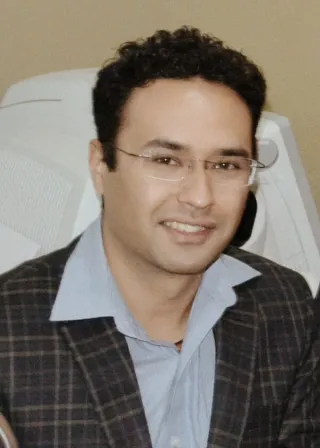
Dr. Gunjan Prasai

Kathmandu medical college and teaching hospital, Kathmandu University Nepal.

2 articles

Dr. Gunjan completed her MBBS from KIST Medical College, Tribhuvan University, and her masters in ophthalmology (MS) from Kathmandu medical college and teaching hospital, Kathmandu University Nepal. She has a keen interest in the retina and ocular imaging. She also serves as an editor in the Nepalese Journal of Ophthalmology.

  1. Articles 16 Dec 2021 4 min read

    Pearls for Indirect Ophthalmoscopy

    Using the indirect ophthalmoscope proficiently is a difficult skill to master, nevertheless is an indispensable one. With adequate practice, you will eventually come to terms with it. Here are a few tips and tricks to help you with it. Important but often likely to be missed: Every day, check if the optics of the indirect ophthalmoscope is working properly and, if wireless- that the battery pack is charged. (Finding out that the optics is not working properly or the indirect ophthalmoscope switching off in the middle of the examination is not only embarrassing but may also undermine the impression that your patient will have about you). Have a dedicated switch to turn off the room light nearby your examination station. It is often easier to “do it yourself” than to command to others/assistant for the lights on and off. Ask them if they are driving or riding or have an important work immediately after the visit at your clinic. Defer the examination to a later time/date if any of the abo

  2. Articles 25 Oct 2021 8 min read

    Anti-VEGFs made Easy for the Postgraduates

    The retina is a highly metabolic tissue and needs a constant high supply of oxygen. Insult to either choroidal or retinal vasculature can lead to a hypoxic state. Throughout the years, neovascularization has been seen to occur in areas neighboring such hypoxic areas. In 1989, this hypoxia-inducible and diffusible factor was discovered to be Vascular Endothelial Growth Factor (VEGF), initially coined as Vascular Permeability Factor (VPF). VEGF was found to be answerable for many types of retinopathies and the increased vascular permeability seen in them. VEGF is a heparin-binding dimeric glycoprotein with di-sulfide-linked A and B subunits. VEGF has been found to be produced by many cell types in the retina including vascular endothelial cells, retinal pigment epithelium, pericytes, Muller cells, retinal neurons, and astrocytes. It is necessary for the survival of retinal cells; prenatally for proper embryological development of the retina as well as postnatally for preserving adult mic