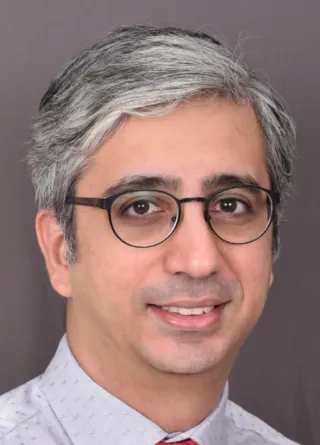

Dr. Devendra Venkatramani

Laxmi Eye Institute, Panvel

1 article

Dr Venkatramani completed his graduation in medicine (MBBS) from Byramjee Jeejeebhoy Government Medical College, Pune, in 2007, and was adjudged the best outgoing student of the college. He received the Anandrao Bhauji Saindane Gold Medal and the Vice Chancellor's Certificate of Merit for standing first in the Maharashtra University of Health Sciences (MUHS). He completed his post-graduate training in ophthalmology in 2011 from the world-renowned Sankara Nethralaya, Chennai, once again being adjudged the best outgoing student, and winning the prestigious Dr S Kanthimathynathan Endowment and Gold Medal in neuro ophthalmology. For a while, Dr Venkatramani was associated with the Indian Institute of Technology (IIT), Madras, as a Project Consultant, where he worked on the design of a mobile operating theatre for performing cataract surgery. Between 2012 and 2013, he pursued a rigorous fellowship in retinal and vitreous surgery from L V Prasad Eye Institute, Hyderabad, where he was trained in the nuances of retinal disease.Dr Venkatramani successfully cleared the FRCS examination (Fellow of the Royal College of Physicians and Surgeons, Glasgow, UK) in 2013, as well as the Advanced ICO Examination (International Council of Ophthalmology). He subsequently became a member of the Royal College of Surgeons in Edinburgh (MRCSEd). He also has interest in research, and has numerous textbook chapters to his name. Dr Venkatramani is also actively involved in post-graduate education, and is a popular speaker at conferences and teaching programmes. His clinical interests include management of age-related macular degeneration, paediatric retinal diseases, diabetic retinopathy and neuro ophthalmology. Dr Venkatramani currently works as a consultant vitreo-retinal surgeon at Laxmi Eye Institute, Panvel, and Ruby Hall Clinic, Pune.

  1. Students Gallery 1 Apr 2021 4 min read

    Ten Tips for Clearing the FRCS Examination

    The FRCS examinations have for long been considered an elite qualification in ophthalmology. While the format and pattern of the examination will evolve in the future, more so due to the special circumstances brought about by the COVID pandemic, certain principles will continue to prevail. The examination generally comprises a written component (multiple-choice questions and/or essay questions) and face-to-face components – the viva voce and the clinical stations. 1. Know why you wish to clear this examination What is your motivation to appear for this examination? Do you wish to prove something to yourself and/or your peers? Are you excited by the prospect of additional degrees? Do you think your job prospects will improve? Once you have a clear goal of what it is that you wish to achieve by becoming an FRCS, your roadmap for appearing and passing the examination will become clear. I would strongly advise against setting down this path half-heartedly or changing one’s mind midway. It