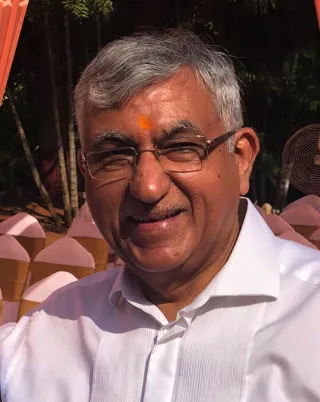

Dr. Ashok Grover

Chairman, Deptt of Ophthalmology, Sir Ganga Ram Hospital, Chairman, Vision Eye Centres , New Delhi

1 article

Dr. A. K. Grover is a prominent name in the realm of ophthalmology. He is an alumnus of Dr. Rajendra Prasad Eye Centre, New Delhi. He pursued his degree of MD from AIIMS. He started his professional life with the Maulana Azad Medical College, New Delhi as an associate professor in the year 1984. In 1992, Dr. Grover joined Sir Ganga Ram Hospital as a senior consultant. In that period, he brought the speciality of oculoplastic surgery to the forefront, as well as he initiated FRCS exams at the hospital to strengthen medical teaching programs. To provide the patients world-class eye treatments, Dr. Grover founded Vision Eye Care Centre, New Delhi in the year 1995. His area of specialities involves oculoplastic, orbital, lacrimal, periocular aesthetic surgery, phacoemulsification and refractive surgery (Lasik including bladeless femtosecond LASIK and ICL). The enormous contributions of Dr. Grover have earned him several recognition including prestigious Padma Shri award by the president of India, the Fellowship of MNAMS, FRCS (Glasgow) FIMSA and FICO. Currently, Dr. A. K. Grover is available at Sir Ganga Ram Hospital as the senior consultant, ophthalmology, and chairperson, Vision Eye Centers, New Delhi.

  1. Articles 5 Jul 2022 11 min read

    Ten Pearls to Improve Your Surgical Skills in Oculoplasty

    Oculoplastic surgery, despite being a niche surgical branch, encompasses a variety of procedures involving the nasolacrimal apparatus, orbit and eyelids. Having evolved into a speciality only in the last 6-7 decades, it also includes fields such as trauma, oncology and oculofacial aesthetics, which make it fascinating as well as challenging1. Just as in most ophthalmic sub-specialities, Oculoplastics has a steep learning curve for most of the surgical interventions and each case is vastly different from the next. Here are our Ten Pearls that should help the beginner Oculoplastics consultant, fellow or fellowship aspirant to hone their skills in a more systematic manner: 1. Documentation and history taking: One of the most essential skills in an oculoplastic practice is uniform and accurate pre- and post-operative documentation. It is important from a legal as well as an academic standpoint, to take patient photographs as well as measurements of the specimen that have been obtained intr